
Lakeshore Facial Plastic Surgery offers facial rejuvenation procedures for patients concerned about jowls, sagging facial tissues, and neck laxity. Under the direction of Michael S. Fozo, MD, FACS, a double-board-certified facial plastic and reconstructive surgeon, the Macomb, Michigan, practice evaluates how changes in deeper facial tissues, developing jowls, and neck muscle laxity affect facial contours. A surgical consultation helps determine whether a deep plane facelift, necklift surgery, or another approach may be appropriate based on the patient's anatomy and goals.
Lakeshore Facial Plastic Surgery highlights the role of underlying facial structures in surgical planning for facial aging. When changes extend beyond the skin's surface, a surgical evaluation may consider how deeper tissues contribute to the appearance of the cheeks, jawline, and neck. Michael S. Fozo, MD, FACS, a double-board-certified facial plastic and reconstructive surgeon at Lakeshore Facial Plastic Surgery, offers contemporary techniques for deep plane facelift and necklift surgery to address bigger anatomical changes alongside surface concerns.

Those attachments influence how facial tissues can be repositioned. Through its Deep Plane Facelift procedure, the practice addresses sagging facial tissues to improve lower-face contours. As the cheeks descend with age, they can contribute to jowls and soften the definition of the jawline. Repositioning these tissues can help restore a more defined transition between the cheeks and lower face, rather than relying on skin tightening alone.
Rather than relying primarily on skin tension, the technique works beneath the superficial musculoaponeurotic system (SMAS) to reposition selected deeper structures together. Greater tissue movement does not automatically produce a better result; the extent of correction must reflect the patient's anatomy and the structures involved. The same principle applies beneath the jawline, where neck tissues may require a different surgical approach.
Below the jawline, a different set of structures can disrupt the same facial contour. Prominent platysmal bands, excess fat beneath the chin, or loose skin may require separate correction even after facial tissues have been repositioned. To address these concerns, Lakeshore Facial Plastic Surgery offers necklift surgery, with surgical options that may include muscle adjustment, fat removal or redistribution, and excision of redundant skin.
A Lakeshore Facial Plastic Surgery spokesperson explained:
"Patients often come in knowing what bothers them about their appearance, but not necessarily what is causing it. Two people may point to the same area of their face and need very different approaches. Our responsibility is to explain those differences, discuss what surgery can realistically change, and make sure the treatment fits the person. The goal should never be to make every face look alike."
When Does a Deep Plane Facelift Need a Necklift—and When Does It Not?
A facelift may sharpen the jawline without fully correcting neck laxity. A patient with descended jowls but firm neck skin and minimal muscle banding may primarily need facial repositioning, while pronounced neck bands and loose skin beneath the chin may warrant separate correction despite limited cheek descent. Surgical examination determines whether one or both procedures should be considered.
Combining procedures does not guarantee a better result and requires weighing potential benefits against recovery demands and risks, including bleeding, infection, scarring, asymmetry, and nerve injury. Neither operation stops future aging, making realistic expectations essential to surgical planning.
The same anatomical considerations extend beyond facial lifting. Dr. Michael S. Fozo, a double-board-certified facial plastic surgeon, may evaluate a prominent nasal hump or certain structural breathing concerns for Rhinoplasty Surgery, while excess upper eyelid skin affecting vision may warrant Blepharoplasty. Each procedure addresses a distinct concern rather than substituting for facial or neck correction.
Deep Plane Facelift and Necklift Surgery: Key Considerations
Preoperative Health Review: The surgical team reviews medical history, existing health conditions, medications, and other factors that may affect surgical safety and candidacy.
Procedure Planning: The proposed surgical approach should identify the intended areas of correction, anticipated incision locations, and whether additional procedures are being considered.
Postoperative Follow-Up: Follow-up appointments allow the surgical team to monitor healing, assess recovery progress, and address concerns that arise after surgery.
Frequently Asked Questions
Q: How long does recovery take after facelift or necklift surgery?
A: Initial recovery commonly takes several weeks, although swelling, bruising, and activity restrictions vary with the extent of surgery. Residual swelling may persist beyond the early healing period. Patients should follow their surgeon's individualized recovery instructions rather than rely on a fixed timeline.
Q: Will a deep plane facelift change natural facial expressions?
A: The procedure aims to reposition descended tissues without unnecessarily altering facial expression. Temporary tightness or changes in movement may occur during healing, while complications affecting facial nerves can sometimes cause more persistent changes. Individual outcomes depend on anatomy, surgical technique, and recovery.
Q: Can these procedures correct fine wrinkles and skin texture?
A: Facelift and necklift surgery primarily address tissue descent and laxity. Pigmentation, fine lines, and uneven skin texture may require separate assessment and treatment.
Patients interested in learning whether facelift or necklift surgery may address their concerns can visit https://lakeshorefacialplastics.com/ to review available procedures and request a consultation.
About Lakeshore Facial Plastic Surgery
Lakeshore Facial Plastic Surgery is a facial plastic and reconstructive surgery practice based in Macomb, Michigan. Under the direction of Michael S. Fozo, MD, FACS, the practice provides surgical evaluation and treatment for cosmetic and functional concerns involving the face, nose, eyelids, and neck. Its services encompass facial rejuvenation and procedures addressing selected structural concerns.
###
Contact:
Lakeshore Facial Plastic Surgery
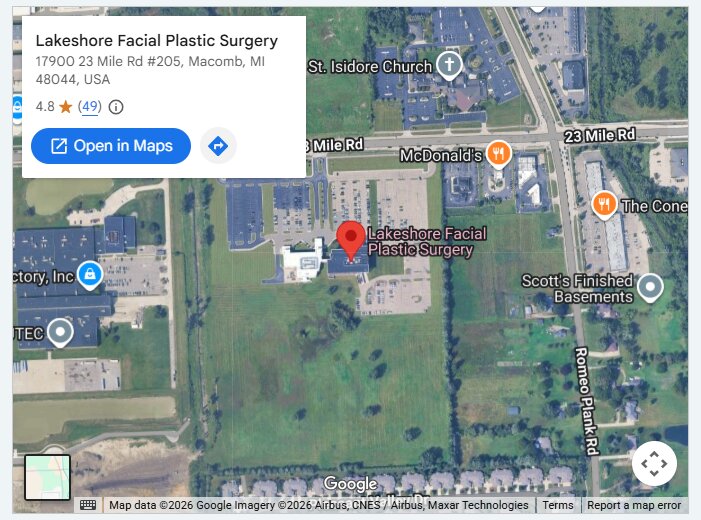
17900 23 Mile Rd, Suite 205, Macomb, MI 48044
(586) 286-6565
https://lakeshorefacialplastics.com/
[email protected]
Social Media:
Facebook: https://www.facebook.com/DrMichaelFozo/
X/Twitter: https://x.com/michael_fozo
YouTube: https://www.youtube.com/channel/UCSvI3QtWOekL6zTv4fI2vaA
Disclaimer: This press release is provided for general informational and educational purposes only and does not constitute medical advice, diagnosis, or treatment. Surgical candidacy, treatment recommendations, recovery, risks, benefits, and results vary based on individual anatomy, medical history, procedure selection, and other clinical factors. The procedures described may not be appropriate for every patient. Individuals considering cosmetic or reconstructive surgery should consult a qualified healthcare professional for an individualized evaluation.
Source: 38 Digital Market News
Release ID: 2703250



